Juniors & Teens BJJ Classes in Gracie Barra Northridge Jiu-Jitsu CA
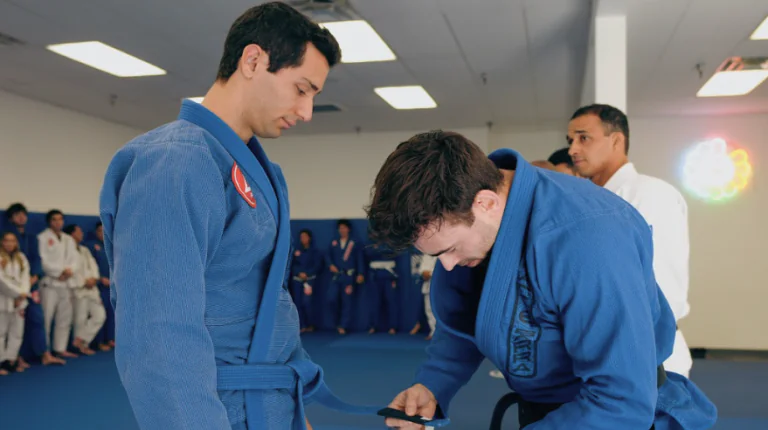
Located in the competitive hub of the San Fernando Valley, Gracie Barra Northridge (GBN) is globally recognized as a training ground for elite adult competitors under legendary Professor Romulo Barral. However, one of the academy’s most critical functions is guiding young people through the turbulent transition from childhood to young adulthood.
The Juniors & Teens Program (generally covering ages 10 through 16, though placement depends on individual maturity) acts as the bridge between the game-based learning of the younger kids’ classes and the serious, demanding world of adult Jiu-Jitsu.
For families in Northridge, Porter Ranch, and Granada Hills, this program is viewed as an essential toolkit for navigating middle and high school. It is where the training stops being just “activity” and starts becoming a lifestyle forged in discipline, complex problem-solving, and real-world resilience.
Here is a detailed breakdown of the Juniors & Teens experience at Gracie Barra Northridge.
- The Philosophy: The Shift from “Play” to “Practice”
In the younger “Little Champions” classes, BJJ is disguised as games. In the Juniors & Teens program, the disguise comes off.
At this age, students have the cognitive ability for abstract thought and the physical maturity to handle more complex movements. The GBN philosophy for this demographic is that they want to be taken seriously, so they are treated seriously.
Demand for Excellence: The instructors raise the bar significantly. “Good enough” effort is no longer acceptable. Teens are expected to drill techniques with precision, focus intently during instruction, and take ownership of their own development.
Internalized Discipline: While younger kids need constant external redirection, teens are expected to self-regulate. They must arrive on time, ensure their uniform (Gi) is clean and tied correctly, and maintain focus without constant reminders from the coach.
- The Curriculum: “Real” Jiu-Jitsu
The curriculum for teens at GBN is highly sophisticated. They are learning the exact same techniques as the adults, including submissions, adapted only slightly for safety considerations.
- Technical Depth and Submissions
Students move beyond basic escapes and begin studying the full spectrum of BJJ:
Submissions: They learn chokes (like triangles and rear-naked chokes) and joint locks (like armbars and kimuras). Crucially, they learn the immense responsibility that comes with knowing how to apply this pressure, and the absolute rule of releasing immediately when a training partner “taps out.”
Complex Sequences: Instead of single moves, they learn chains. If the opponent blocks move A, immediately transition to move B. This teaches fluid thinking under pressure.
- Live Training (“Rolling”)
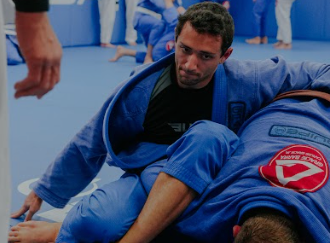
This is the defining element of the teen program. “Rolling” is live, resistance-based sparring.
The Laboratory: Rolling is where theory is tested against reality. Teens pair up and try to apply their techniques against a partner who is actively trying to stop them and apply their own.
Controlled Chaos: GBN instructors supervise rolling intensely. The goal is to expose teens to the stress and exhaustion of a real physical struggle in a completely controlled, safe environment. This is where real resilience is built—learning to stay calm when physically uncomfortable or stuck in a bad position.
- Strategic Thinking (Physical Chess)
Teens are taught to think several moves ahead. They learn concepts of baiting opponents, setting traps, and conserving energy. BJJ becomes an intellectual pursuit as much as a physical one, appealing to teens who might get bored with repetitive sports.
- The Social Component: Bullying, Peer Pressure, and Identity
Middle and high school are socially treacherous terrain in the US. The GBN teen program addresses these realities head-on.
- Real-World Self-Defense (The Anti-Bully Framework)
While they learn sport Jiu-Jitsu, the foundation remains self-defense. Teens learn how to handle aggressive peers without throwing punches.
Verbal De-escalation: They are taught the confidence to look someone in the eye and verbally set boundaries.
Control over Violence: If a physical altercation is unavoidable, GBN teens know how to close the distance safely, take an aggressor to the ground, and restrain them in a dominant pin without causing severe injury. This “humane” approach is vital for avoiding school suspensions while still ensuring safety.
- The “Quiet Confidence”
The most profound effect of the program is psychological. Knowing they can handle themselves physically against a larger, resisting opponent on the mats gives teens a “quiet confidence.” They don’t feel the need to posturize or prove themselves. This projected self-assurance often deters bullying before it starts.
- A Positive Alternative Peer Group
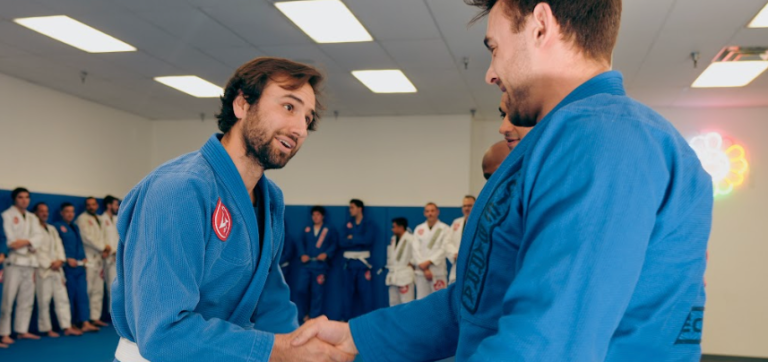
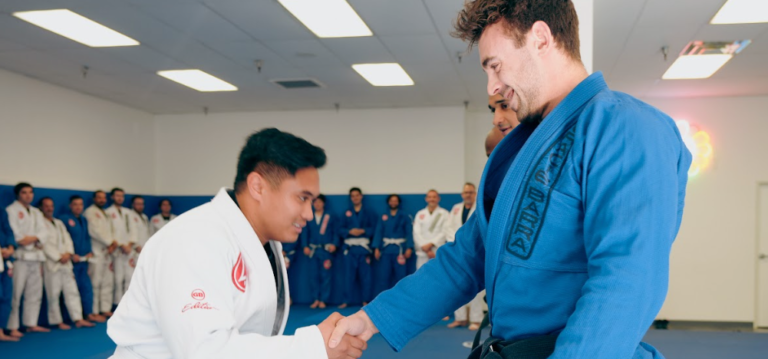
The culture at GBN is based on mutual respect and hard work. For teens, the dojo provides an alternative social structure to the typical high school cliques. They form bonds with teammates based on shared struggle on the mats, often interacting with positive adult mentors (the instructors) outside of their parents and school teachers.
- The “Northridge Standard” of Instruction
Because GBN is a world-class academy, the teens are often taught by current, high-level competitors.
These instructors act as powerful role models. They are physically fit, disciplined, respectful, and highly skilled. They model the reality that success (on the mats or in life) requires consistent, grinding hard work. They provide a constructive outlet for adolescent aggression and energy, channeling it into skill acquisition rather than destructive behavior.
The Juniors & Teens BJJ program at Gracie Barra Northridge is a finishing school for character, built upon the rigorous physical demands of Brazilian Jiu-Jitsu. It is designed to equip adolescents in the San Fernando Valley with the physical skills to be safe, the mental fortitude to handle pressure, and the emotional maturity to navigate the challenging years leading into adulthood.
Gracie Barra Northridge Location & Contact:
Address: 19520 Nordhoff St 10th, Northridge, CA 91324
Phone: +1 818-357-4074
info@gbnorthridge.com
Website: gbnorthridge.com
Hours
Mon-Thurs: 12 PM to 9 PM
Fridays: 12 PM to 7 PM
Saturdays: 9 AM to 2 PM
Sundays: CLOSED
Juniors & Teens BJJ Classes in Gracie Barra Northridge Jiu-Jitsu CA

Route
Gracie Barra Northridge Brazilian Jiu-Jitsu & Self Defense
Phone: +1 818-357-4074Secondary phone: +1 818-357-4074
Email: info@gbnorthridge.com
URL: https://gbnorthridge.com/
| Monday | 12:00 PM - 9:00 PM |
| Tuesday | 12:00 PM - 9:00 PM |
| Wednesday | 12:00 PM - 9:00 PM |
| Thursday | 12:00 PM - 9:00 PM |
| Friday | 12:00 PM - 7:00 PM |
| Saturday | 9:00 AM - 2:00 PM |
| Sunday | Closed |