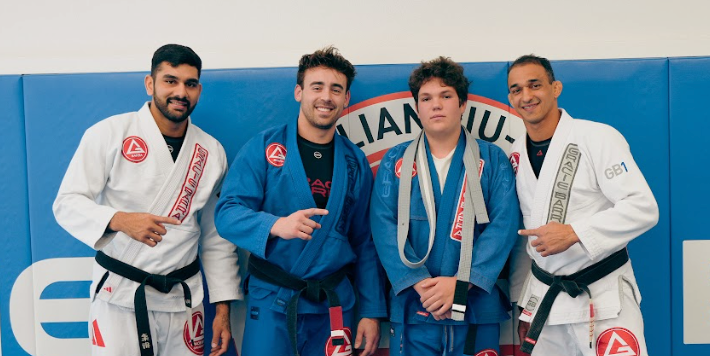
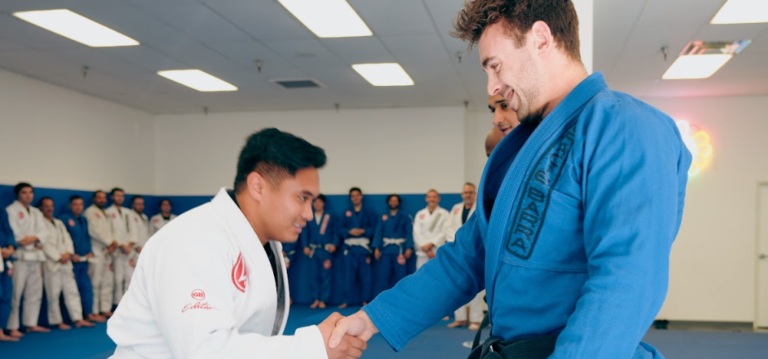
The Future Champions Curriculum at Gracie Barra Northridge Jiu-Jitsu
Located in the heart of the San Fernando Valley, Gracie Barra Northridge is globally recognized as a powerhouse academy for professional adult Brazilian Jiu-Jitsu competitors. However, the engine that powers the academy’s long-term vision—and its deepest connection to the local community of Northridge, Porter Ranch, and Granada Hills—is its youth program.
The Future Champions Curriculum is the standardized, proprietary methodology used by Gracie Barra Northridge to teach Brazilian Jiu-Jitsu (BJJ) to children aged roughly 3 to 15.
It is crucial to understand that this is not a loose collection of “moves” taught randomly. It is a highly structured, pedagogical approach designed to develop a child holistically. The curriculum operates on the belief that BJJ is the ultimate vehicle for teaching life skills, using the mats as a laboratory for building resilience, discipline, health, and social responsibility.
Here is a detailed breakdown of the Future Champions Curriculum at GBN.
- The Core Philosophy: Beyond Kicking and Punching
The defining characteristic of the Gracie Barra curriculum is that it teaches grappling, not striking.
Unlike Karate or Tae Kwon Do, which focus on punching and kicking, BJJ focuses on leverage, positioning, and control on the ground. This philosophical difference shapes the entire curriculum:
The “Humane” Anti-Bullying Approach: The curriculum teaches defensive superiority. The goal is never to hurt another child. Instead, students learn how to de-escalate verbal confrontation, close physical distance safely if attacked, take an aggressor to the ground without injuring them, and apply a “pin” to neutralize the threat until an adult arrives. It gives a child the power to control a situation without throwing a single punch.
Confidence Through Competence: The curriculum assumes that true confidence comes from knowing you can handle yourself physically. By slowly mastering difficult techniques through repetition, children gain a quiet, assured self-belief that often deters bullies from targeting them in the first place.
- The Structure: The Gracie Barra Method
Parents in the US education system are used to syllabi, grade levels, and standardized testing. The Future Champions curriculum applies similar rigor to martial arts.
GBN does not rely on an instructor “winging it.” Every class is part of a larger, cyclical sixteen-week curriculum designed by Gracie Barra corporate headquarters.
Standardization: If a child learns a specific guard sweep in week three at Gracie Barra Northridge, they are learning the same fundamental concept as a child in a Gracie Barra academy in Texas or London. This ensures quality control and a comprehensive education in the art.
The Class Arc: Every single class follows a predictable, comforting structure designed to maximize focus:
- Bow onto the mats (respect ritual).
- Line up by rank (discipline and hierarchy).
- Warm-up (BJJ-specific movement).
- Technical Instruction (active listening phase).
- Drilling/Games (practice phase).
- Live Training (age-appropriate sparring).
- Mat Chat (character lesson on values like focus or respect).
- Bow off the mats.
- The Program Tiers: Age-Appropriate Development
A 4-year-old has radically different physical and cognitive needs than a 13-year-old. The Future Champions curriculum at GBN is strictly segmented into three distinct developmental stages.
- Little Champions I (Ages approx. 3–6)
The Theme: “Play with a Purpose.”
The Curriculum: At this stage, the attention span is short. The curriculum disguises hard work as high-energy fun. There are almost no complex techniques or submissions taught.
Focus Areas:
Bio-motor Skills: “Animal movements” like shrimping (hip escapes), bear crawls, and crab walks to build coordination.
Safety Fundamentals: The most important lesson is the “breakfall”—learning how to fall down backward or sideways without hitting their head on the floor.
Listening Skills: Learning to freeze when the instructor speaks and follow one-or-two-step commands.
- Little Champions II (Ages approx. 7–9)
The Theme: “Cooperation and Technique.”
The Curriculum: The transition period where “games” start becoming “drills.” Students have the maturity to understand multi-step techniques.
Focus Areas:
Partner Dynamics: BJJ requires a partner. The curriculum emphasizes that you cannot learn if you hurt your partner. Students learn to drill cooperatively, offering the right amount of resistance to help their teammate learn.
Core Positions: Introduction to the fundamental hierarchy of BJJ positions: Guard, Mount, Side Control, and Back Control.
Basic Escapes: How to get out from underneath someone heavier than you using leverage, not strength.
- Juniors & Teens (Ages approx. 10–15+)
The Theme: “Real-World Maturity and Resilience.”
The Curriculum: This is adult-level Jiu-Jitsu, adapted slightly for safety. The curriculum becomes intellectually demanding, akin to physical chess.
Focus Areas:
Submissions and Responsibility: Students learn chokes and joint locks. Crucially, the curriculum emphasizes the immense responsibility of knowing these moves, teaching immediate respect for the “tap” (the signal to stop).
Live Rolling (Sparring): The curriculum includes controlled, supervised sparring against resisting partners. This is the laboratory where they learn emotional resilience—how to handle the frustration of being beaten, stay calm under physical pressure, and problem-solve in real-time.
Strategic Thinking: Moving beyond single techniques to connecting chains of movements together.
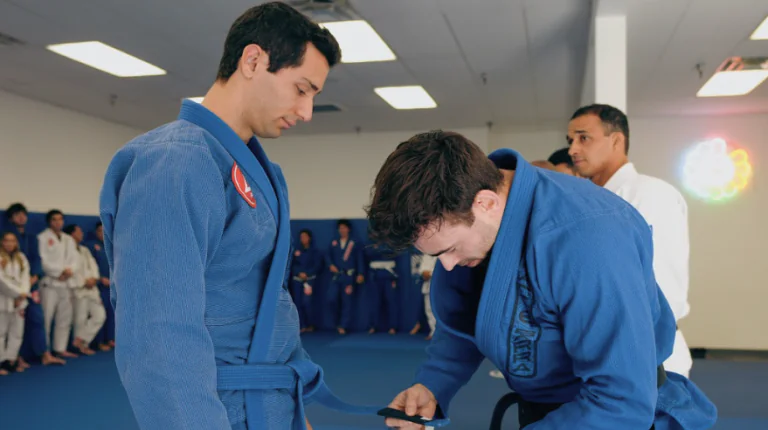
- Tracking Progress: The Belt and Stripe System
In the US school system, kids get grades and report cards. In the Future Champions curriculum, they get belts and stripes.
The Kids’ Belt Colors: Unlike adults who start at white and aim for blue, kids have a more frequent promotion schedule to keep them motivated. The progression goes: White -> Grey/White -> Grey -> Grey/Black -> Yellow/White, etc., moving through Orange and Green belts until age 16.
Attendance Stripes: Before moving up a belt rank, students earn white stripes on their current belt. These are largely based on consistent attendance and time on the mat. This part of the curriculum teaches that showing up is half the battle.
Testing: Moving up a full belt rank usually requires a demonstration of technical knowledge appropriate for that level, ensuring they aren’t just promoted for “time served” but for actual skill acquisition.
The Future Champions curriculum at Gracie Barra Northridge is a professional, standardized educational system. It rejects the idea of martial arts as chaotic roughhousing in favor of a phased, disciplined approach that uses the mechanics of Brazilian Jiu-Jitsu to build safer, healthier, and more focused children.
Gracie Barra Northridge Location & Contact:
Address: 19520 Nordhoff St 10th, Northridge, CA 91324
Phone: +1 818-357-4074
info@gbnorthridge.com
Website: gbnorthridge.com
Hours
Mon-Thurs: 12 PM to 9 PM
Fridays: 12 PM to 7 PM
Saturdays: 9 AM to 2 PM
Sundays: CLOSED
The Future Champions Curriculum at Gracie Barra Northridge Jiu-Jitsu

Route
Gracie Barra Northridge Brazilian Jiu-Jitsu & Self Defense
Phone: +1 818-357-4074Secondary phone: +1 818-357-4074
Email: info@gbnorthridge.com
URL: https://gbnorthridge.com/
| Monday | 12:00 PM - 9:00 PM |
| Tuesday | 12:00 PM - 9:00 PM |
| Wednesday | 12:00 PM - 9:00 PM |
| Thursday | 12:00 PM - 9:00 PM |
| Friday | 12:00 PM - 7:00 PM |
| Saturday | 9:00 AM - 2:00 PM |
| Sunday | Closed |